
Quick answer: Gas, bloating and acid reflux are usually caused by how and what we eat (fast, late or heavy meals), food triggers such as gluten, dairy, spicy food or caffeine, and an imbalance in gut bacteria. Eating slowly, spacing meals 3–4 hours apart, a short walk after meals and simple Indian remedies like jeera or saunf water help most people. If symptoms persist, the root cause needs to be found.
By Janvi Chitalia, Gut Health & Functional Medicine Nutritionist · Last updated: 24 November 2026
Gas, bloating or acid reflux can drain your energy, affect your confidence and disrupt your day. These symptoms are common, but they are not normal. Your gut is trying to tell you something.
Reflux in particular is widespread in India: a meta-analysis of Indian studies covering more than 20,000 people found that around 15% of adults have gastroesophageal reflux disease (GERD) (Indian Journal of Gastroenterology, 2021).
Key takeaways
- Gas comes from undigested food fermenting in the gut.
- Bloating is often linked to irregular eating, food intolerances, constipation or a sluggish gut.
- Acid reflux happens when stomach acid flows back into the food pipe, often after heavy meals, lying down after eating, or stress.
- Eating mindfully, spacing meals, gut-friendly teas and gentle movement are the first steps.
- Persistent symptoms need a root-cause approach, not just antacids.
What causes gas, bloating and acid reflux?
Gas
Gas is usually caused by undigested food fermenting in the gut. It can result from food intolerances, poor digestion or an imbalance in gut bacteria.
Bloating
Bloating often stems from irregular eating habits, food intolerances or a sluggish gut. Constipation and fluid retention can make it worse. Certain foods can also help: see these enzyme-rich foods for bloating. If bloating comes with tummy pain and changing bowel habits, read about IBS and gut health.
Acid reflux (heartburn)
Acid reflux occurs when stomach acid travels back up into the oesophagus (food pipe). Common triggers are heavy meals, lying down soon after eating, and stress. When reflux happens often, it may be gastroesophageal reflux disease (GERD); learn how I support clients with GERD and acid reflux.
Why is my stomach so sensitive?
In my clinic, two factors come up again and again:
- Food triggers such as gluten, dairy, spicy foods and excess caffeine.
- Gut dysbiosis: an imbalance in gut bacteria or an overgrowth of yeast.
What can I do today to reduce bloating and acidity?
- Eat mindfully. Slow down, chew thoroughly and avoid screens while eating.
- Space your meals. Leave 3–4 hours between meals so digestion can finish.
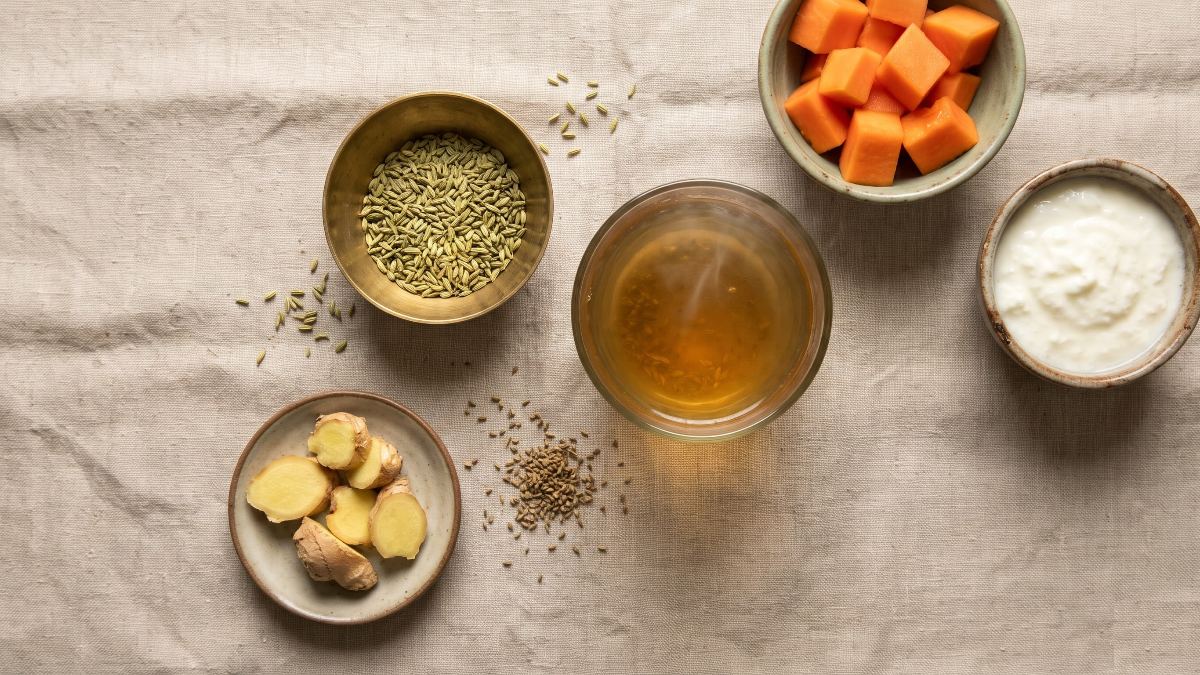
- Sip gut-friendly teas. Try cumin (jeera), fennel (saunf), ajwain or ginger tea after meals. Peppermint tea can ease gas and bloating, but skip it if reflux is your main problem, as it can relax the valve that keeps acid down.
- Hydrate wisely. Sip warm water through the day, but avoid drinking large amounts during meals.
- Track your symptoms. Keep a food and mood journal to spot patterns and triggers.
- Move gently. A 10-minute walk after meals can reduce bloating and reflux.
- Raise your head while sleeping. Elevating the head of the bed helps prevent night-time reflux.
What should I eat and avoid with a sensitive stomach?
For quick kitchen fixes, also see my home remedies for acidity.
| Eat more | Limit or avoid |
|---|---|
| Soothing foods: aloe vera juice, banana, papaya, cooked vegetables, rice, moong dal | For reflux: citrus fruits, tomato, coffee, chocolate |
| Probiotic foods: homemade curd, buttermilk (chaas), fermented kanji, sauerkraut | For everyone: carbonated drinks, fried and very spicy food |
| Herbal support: ½ tsp jeera in warm water after meals; shredded ginger in warm water for indigestion | For gas and bloating: raw onion, raw garlic, broccoli, cabbage |
Which lifestyle changes help?
- Manage stress. Breathwork, yoga or guided meditation support the gut–brain axis.
- Protect your sleep. Avoid late-night snacking and aim for 7–8 hours of restful sleep.
- Wear loose clothing. Tight waistbands can worsen bloating and reflux.
When should I see a doctor?
See a doctor promptly if you have difficulty or pain when swallowing, unexplained weight loss, vomiting, black or bloody stools, chest pain, or symptoms that wake you at night or last more than a few weeks.
Frequently asked questions
What is the main cause of gas, bloating and acid reflux?
The most common causes are eating too fast or too late, large or heavy meals, food triggers such as gluten, dairy, spicy food or excess caffeine, and an imbalance in gut bacteria (gut dysbiosis). Stress also slows digestion and worsens all three symptoms.
Which Indian foods help a sensitive stomach?
Soothing options include banana, papaya, cooked vegetables, rice and moong dal. Homemade curd, buttermilk and fermented kanji add probiotics, and jeera, saunf, ajwain or ginger water after meals can ease gas and indigestion.
Which foods should I avoid with acid reflux?
Limit carbonated drinks, fried and very spicy food, citrus fruits, tomato, coffee and chocolate. For gas and bloating, raw onion, garlic, cabbage and broccoli can be triggers for some people.
Is it normal to feel bloated every day?
Bloating is common but it is not normal to have it every day. Daily bloating usually means your gut is struggling with something, such as a food intolerance, constipation or gut bacteria imbalance, and it is worth finding the root cause.
When should I see a doctor for acid reflux or bloating?
See a doctor promptly if you have difficulty or pain swallowing, unexplained weight loss, vomiting, black or bloody stools, chest pain, or symptoms that wake you at night or last more than a few weeks.
Related reading: 4 signs your gut is getting disturbed again: how to spot early warning signs like brain fog, skin flare-ups and sugar cravings.
Still struggling with gas, bloating or reflux? A root-cause gut health consultation can find what is driving your symptoms. I see clients online across India and in-clinic in Mumbai.
About the author: Janvi Chitalia is an integrative gut microbiome health coach and functional medicine nutritionist, trained with the Institute for Integrative Nutrition (New York) and in functional medicine, with a PG Diploma in Weight Management (University of Chester) and a Fellowship in Clinical Nutrition (Apollo). She has guided 2,000+ clients across India.
This article is for general information and is not a substitute for medical advice. Please consult your doctor for diagnosis and treatment.




Leave A Comment