
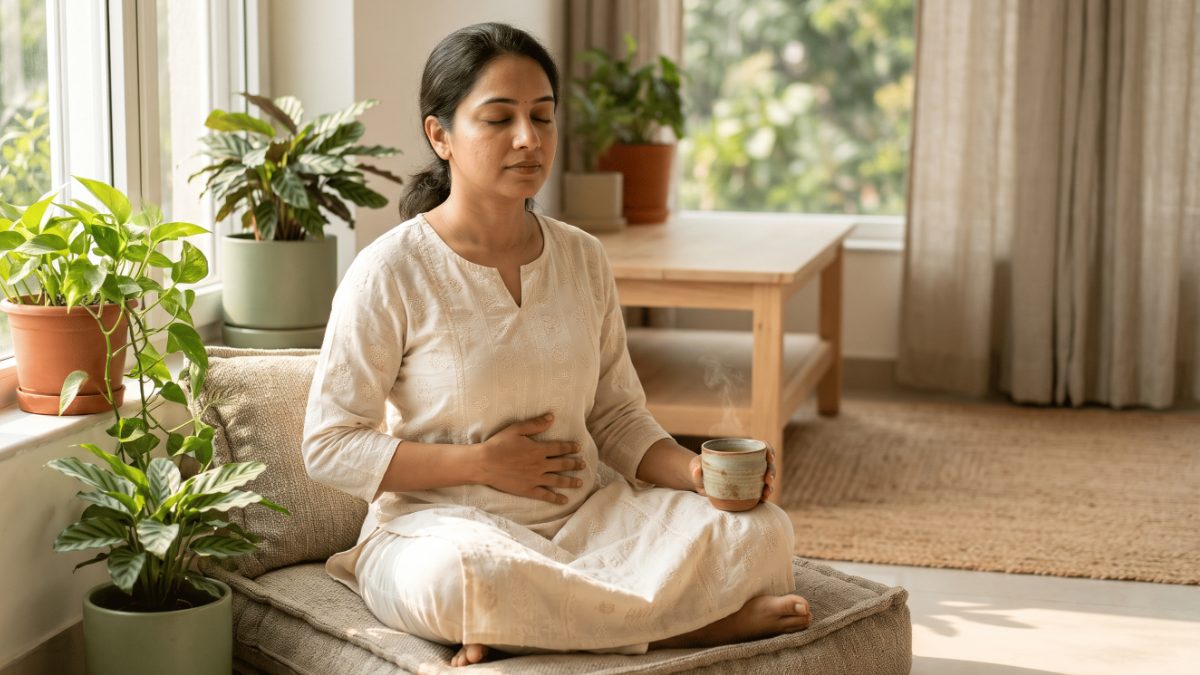
Quick answer: Stress affects the gut through the gut-brain axis. Chronic stress can change gut movement (causing diarrhoea or constipation), make the gut more sensitive to pain and bloating, and disturb the balance of gut bacteria. Gut problems, in turn, can raise stress, creating a cycle. Breaking it means calming the nervous system (breathing, yoga, sleep) and supporting the gut with prebiotic and probiotic foods.
By Janvi Chitalia, Gut Health & Functional Medicine Nutritionist · Last updated: 28 November 2026
Stress is a natural part of life, but when it becomes chronic it can seriously affect your health, especially your gut. When you are anxious or under pressure, it can show up as bloating, indigestion, cramps or pain.
It works the other way too: gut problems can raise stress and anxiety, creating a cycle that affects both body and mind.
Key takeaways
- The gut and brain are in constant two-way communication through nerves, hormones and the immune system.
- Chronic stress can change gut movement, increase gut sensitivity and disturb gut bacteria.
- Stress is a well-known trigger for IBS flare-ups.
- Slow breathing before meals, yoga and 7–8 hours of sleep help calm the gut-brain axis.
- Prebiotic and probiotic foods, magnesium-rich foods and, where appropriate, adaptogens can support resilience.
How does stress affect the gut?
Research shows that both short-term and chronic stress change how the gut works, including its nerve circuits, sensitivity, barrier function and the gut bacteria themselves (Journal of Physiology, 2023). In practice, this shows up in three main ways:
- Gut bacteria imbalance. Chronic stress can reduce beneficial bacteria and let less helpful ones thrive, which is linked to digestive conditions such as IBS.
- A more sensitive gut. Stress can make you feel bloating, cramps and pain more strongly, and can speed up or slow down gut movement, leading to diarrhoea or constipation.
- The mood–digestion cycle. Anxiety can cause nausea or stomach pain, and a troubled gut can in turn worsen anxiety and low mood.
What is “adrenal fatigue”?
“Adrenal fatigue” is a term used in holistic health to describe symptoms often seen with long-term stress: tiredness, difficulty waking up, mood swings and cravings for salty or sugary foods. It is not a recognised medical diagnosis, so if you have these symptoms it is worth checking thyroid, iron, vitamin D and blood sugar with your doctor. What is well established is that chronic stress affects cortisol rhythms, sleep and digestion.
How can I manage stress for better gut health?
- Breathe before you eat. Try box breathing (inhale for 4, hold for 4, exhale for 4) for a minute before meals to shift your body into “rest and digest”.
- Practise yoga. Gentle styles like Hatha or Iyengar yoga relieve stress and support digestion.
- Prioritise sleep. Aim for 7–8 hours to help restore balance and gut function.
- Quit smoking. Smoking harms the digestive system and raises the risk of ulcers and other gut diseases.
- Eat for your gut. Include prebiotics (garlic, onion, banana, asparagus) and probiotics (curd, buttermilk, kanji, kefir).
Which foods and nutrients help with stress and the gut?
These can support both your nervous system and your gut:
| Support | Examples | How it may help |
|---|---|---|
| Probiotic foods | Curd, buttermilk, kanji, kefir, kimchi | Support a healthy balance of gut bacteria |
| Specific probiotic strains* | L. helveticus R0052 with B. longum R0175, L. casei Shirota | Studied for stress, mood and stress-related gut symptoms |
| Magnesium-rich foods | Leafy greens, almonds, pumpkin seeds, whole grains, avocado | Magnesium supports nervous system function and relaxation |
| Adaptogens* | Ashwagandha, tulsi (holy basil), rhodiola | May help the body cope with stress and lower cortisol |
Is there a simple drink for stressful days?
When you are run down, this nourishing drink can help with hydration and electrolytes:
Coconut-citrus drink: 1 cup coconut water, juice of 1 orange, juice of ½ lemon, ¼ tsp turmeric and a pinch of sea salt. Blend or stir and drink fresh.
*Take probiotic supplements and adaptogens only with guidance from your nutritionist or doctor, especially if you are pregnant, breastfeeding, on thyroid, blood pressure, diabetes or psychiatric medication, or have an autoimmune condition.
When should I see a doctor?
See a doctor if stress or anxiety is affecting your daily life, sleep or appetite, or if gut symptoms come with weight loss, blood in your stool, persistent vomiting or severe pain. If you feel overwhelmed or hopeless, please reach out to a mental health professional or someone you trust.
Frequently asked questions
Can stress cause stomach problems?
Yes. Stress affects the gut through the gut-brain axis and can cause bloating, cramps, indigestion, nausea, diarrhoea or constipation. Ongoing stress can also make conditions like IBS worse.
Can stress change gut bacteria?
Research shows that stress can alter the gut microbiota and gut barrier function. Supporting the gut with fibre, fermented foods, sleep and stress management helps restore balance.
Why do I get diarrhoea when I am anxious?
Stress hormones and nerve signals can speed up movement in the colon and increase gut sensitivity, which is why anxiety can trigger urgency or loose stools.
What is the fastest way to calm a stressed stomach?
Slow, deep breathing for a few minutes, a short walk, a warm drink such as ginger or saunf tea, and avoiding heavy or very spicy food can calm the gut quickly.
Is adrenal fatigue real?
Adrenal fatigue is not a recognised medical diagnosis. Symptoms people describe, such as tiredness and poor sleep, are real and worth investigating with your doctor, while managing stress and supporting sleep and nutrition.
Related reading: Impact of stress on obesity · 4 signs your gut is getting disturbed again
Is stress showing up in your gut? A root-cause gut health consultation can find what is driving your symptoms and build a plan around your body. I see clients online across India and worldwide, and in-clinic in Mumbai.
Book a consultation → or explore my gut health services.
About the author: Janvi Chitalia is an integrative gut microbiome health coach and functional medicine nutritionist, trained with the Institute for Integrative Nutrition (New York) and in functional medicine, with a PG Diploma in Weight Management (University of Chester) and a Fellowship in Clinical Nutrition (Apollo).
This article is for general information and is not a substitute for medical advice. Please consult your doctor for diagnosis and treatment.






Leave A Comment